
 Jonathan Black

In early 2024 we spent a day at Moody’s Credit Trends 2024 – UK conference in London. The message: the UK economy has stagnated and consumers are stretched, but the credit system is far from breaking. These are our takeaways.
The day ran from the macro picture and the election to bank balance sheets, defaults and digital assets. Below are the points we found most useful – starting with the short version.
In short
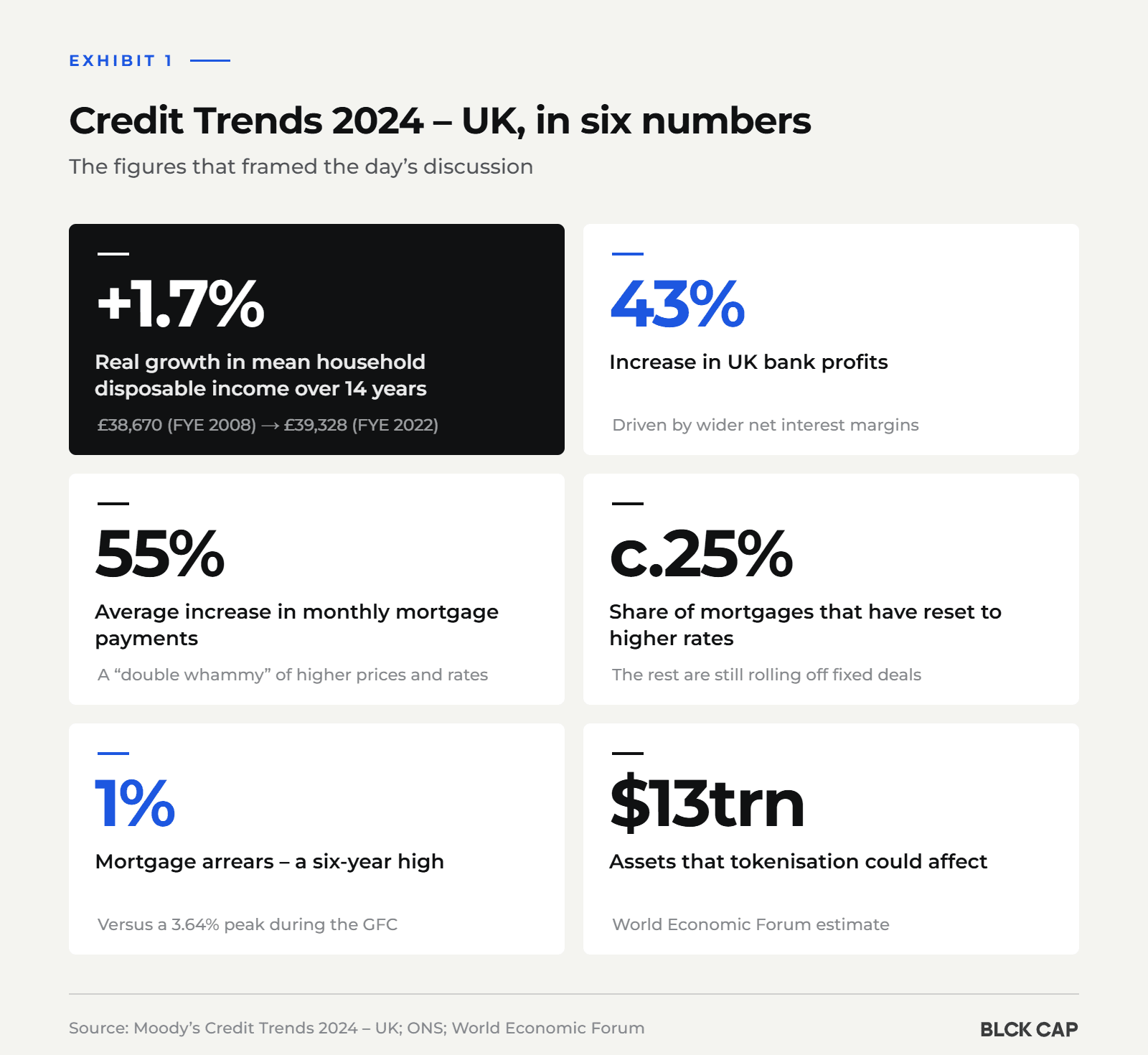
The UK economy has struggled to achieve any real income growth since the 2008 global financial crisis.
Labour are expected to win the next election.
The UK has enormous assets to leverage, so we should be less fearful of our debt and focus on investing in productivity.
Bank profits are healthy, but consumers are struggling. Residential mortgages – the largest asset on UK bank balance sheets – look safe given the tight labour market.
Rate hikes have so far reached only c.25% of mortgages, as borrowers roll off fixed-rate deals.
Mortgage arrears are at a six-year high of 1%, but still far below the 3.64% peak of the financial crisis.
Commercial real estate has a negative outlook, but this is not expected to materially impact banks’ balance sheets.
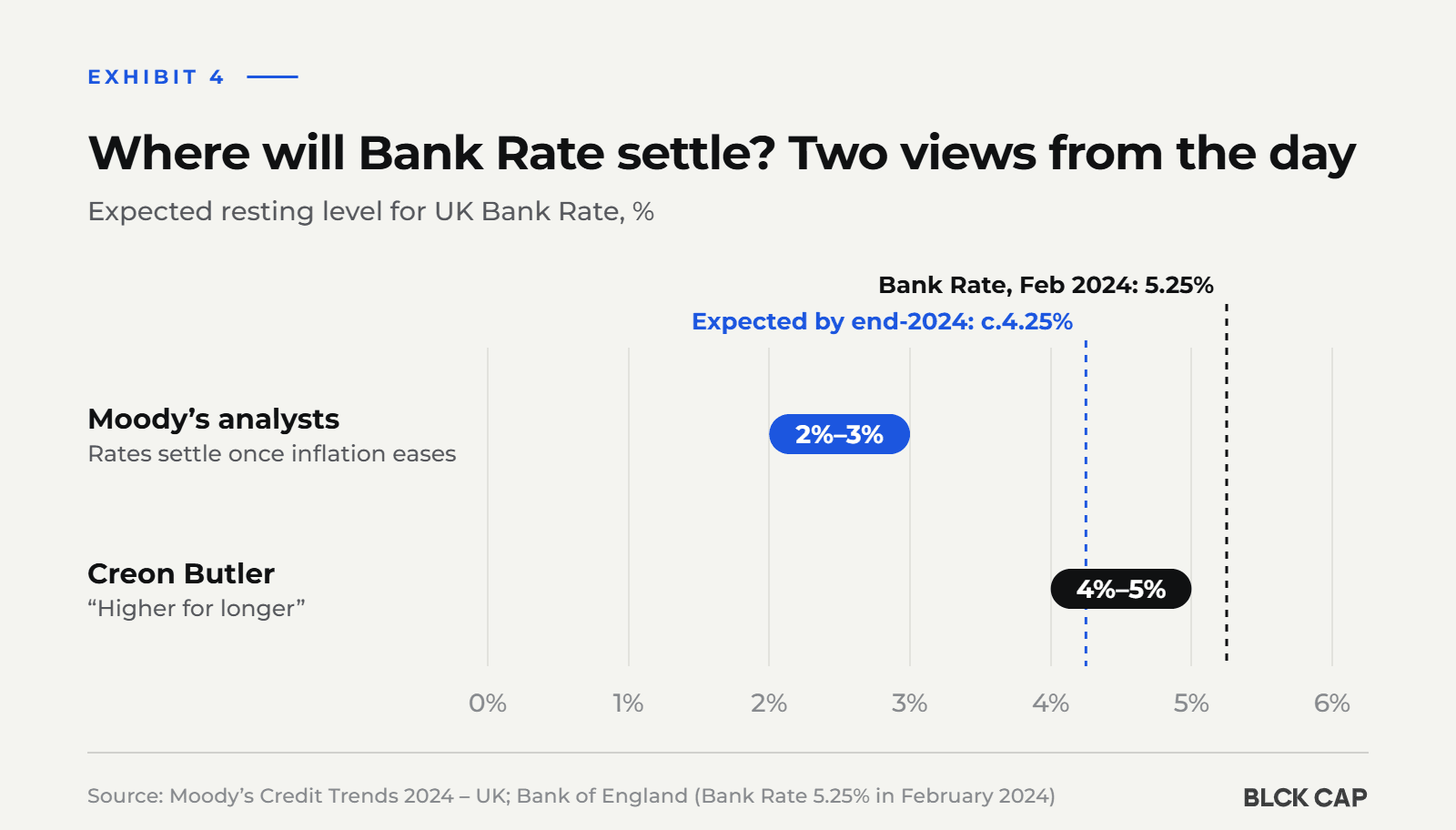
Moody’s expect UK base rates to drop by 1% over 2024, eventually settling at 2–3%.
Moody’s have been downgrading more companies and expect more restructurings in Europe over 2024, following the trend in the US.
Digital finance and tokenisation have plenty of “hype”, but limited appetite for now.
The UK economy: fourteen years without income growth
The opening session came from Creon Butler, who has worked at the LSE, the Bank of England, HM Treasury and the Cabinet Office.
His starting point was stark. Historically, UK household disposable income – income after tax – has doubled roughly every 30 years. Since the financial crisis, it has barely moved.
The ONS data makes the point clearly. In 1977, mean UK household disposable income was £15,246. By 2001 it had reached £30,341 – a doubling in around 25 years, or 2.7% a year. By 2008 it had risen to £38,670, a further 3.1% a year. In 2022 it stood at £39,328: no meaningful growth in 14 years.
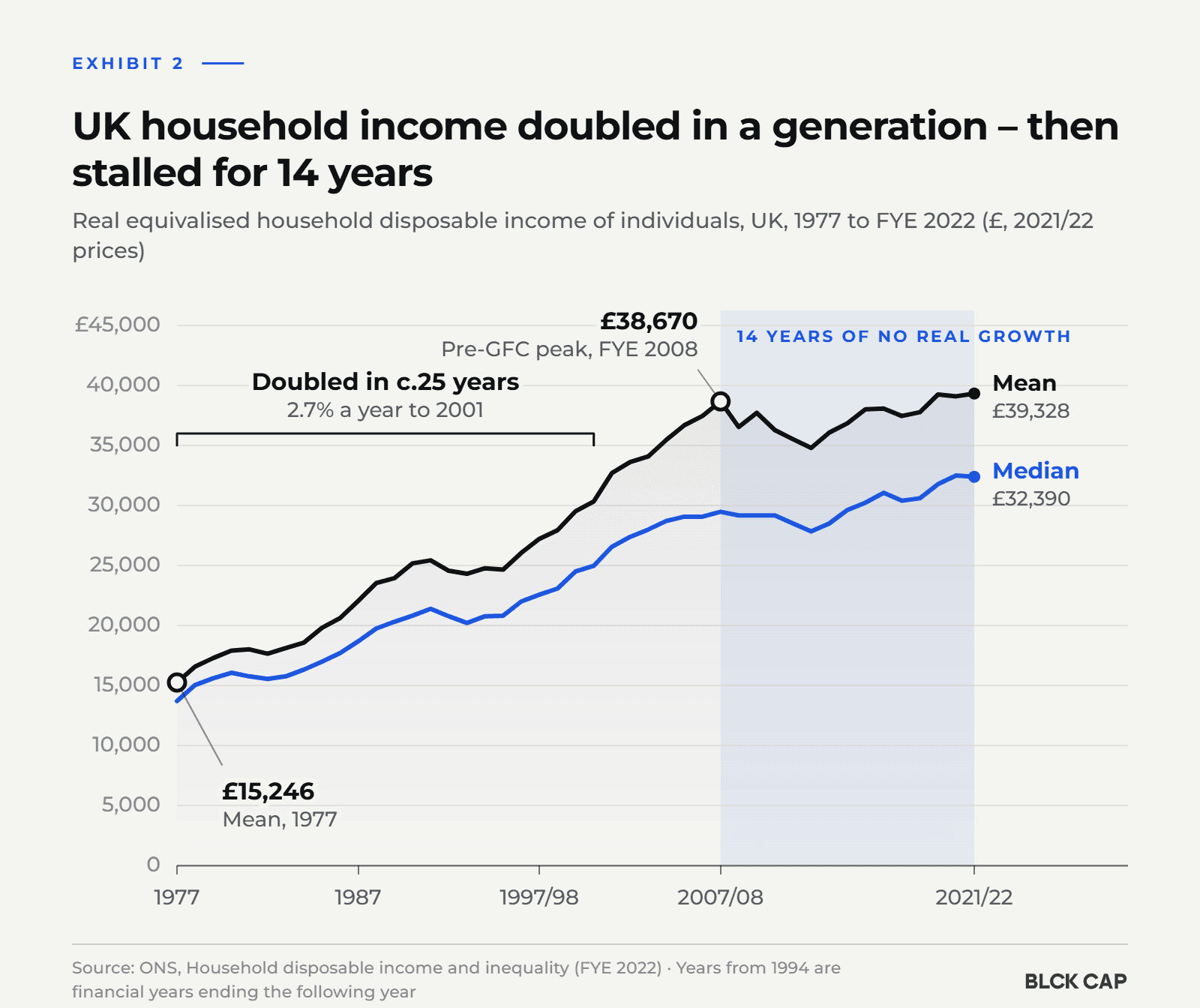
These figures are real – adjusted for inflation – which means there has been essentially no wealth creation for households over the past decade and more (ONS).
Three shocks in a decade
The UK has absorbed three major shocks in quick succession:
The global financial crisis – the largest crash in 80 years.
The pandemic – something never seen before, with lockdowns around the world.
Russia’s invasion of Ukraine – undermining the global security framework that has held since 1945.
After 2008, the aim was to design a financial system that would never again rely on government intervention the way it did then. Instead, we now live in a world where every shock comes with an expectation that the government will step in – and it consistently has. Creon expects climate change, AI and working from home to drive economic shocks of their own in the years ahead.
The UK’s underlying problem is low productivity, which in Creon’s view reflects years of historically low investment. The government is looking to attract and incentivise investment, with climate-related tax subsidies one example.
Election year
2024 brings elections in both the UK and the US. The general expectation in the room was that Labour would win, so Creon was asked what he expects a Labour government to change.
Given the weakened economy, he does not expect drastic changes in the short term. Over the medium to long term, however, he expects Labour to stick to their colours – spending and investing in the country. He is optimistic about the long-term outlook, pointing to the UK’s “enormous assets”, and stressed the importance of Labour not “overdoing fiscal anxiety”.
Where should the government spend?
Given the country’s debt burden, his concern is that capital spending gets cut in favour of debt reduction alone. He hoped the country could relax planning laws to unlock infrastructure investment. His prescription, in short: stabilise spending (stop losing money), and invest in education and infrastructure.
UK credit conditions: healthy banks, stretched consumers
A panel of Moody’s analysts then turned to the state of UK credit.
Banks are doing well. UK banks have seen a 43% increase in profits, driven by wider net interest margins – despite rate hikes, interest paid on current accounts remains low. Moody’s expect those margins to contract over time.
Households and companies are not. Consumers and corporates face a “double whammy”: inflation has pushed up prices, and rate hikes have made debt far more expensive to service. Across the UK, monthly mortgage payments have risen by 55% on average.
Mortgage arrears are rising – now at 1%, a six-year high – but from a low base, and a long way below the levels seen during the financial crisis.
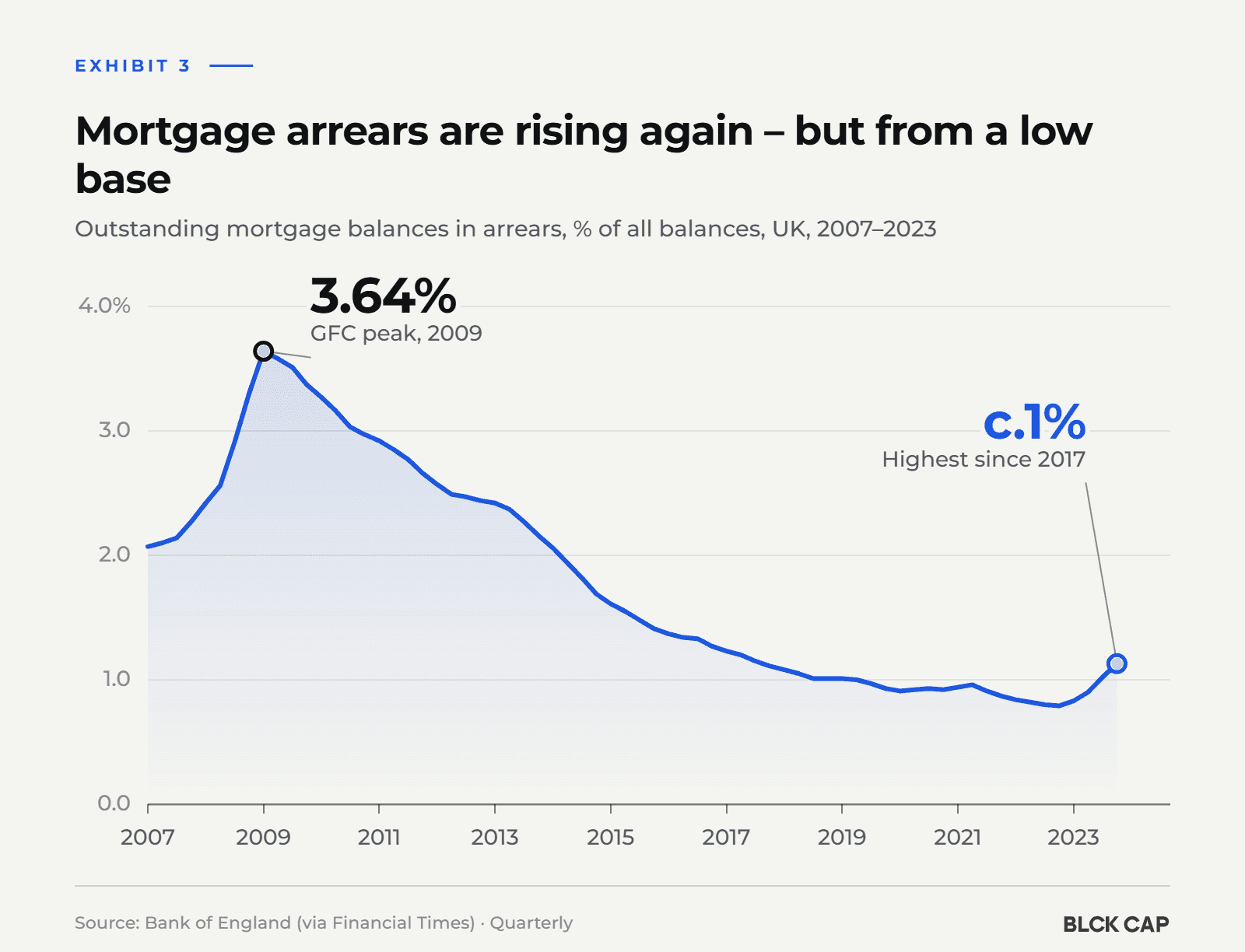
There are reasons for comfort. Banks have started to cut mortgage rates (some below 4%) and house prices are slowly rising, both of which support bank balance sheets. The impact of higher rates has also been delayed: only c.25% of mortgages have “reset” so far – although even with rates falling, new mortgages remain far more expensive than loans written between 2019 and 2022.
The tight labour market, and the wage growth that comes with it, has helped households absorb higher costs. Arrears are expected to keep rising, but not to the levels of the financial crisis. Buy-to-let landlords have so far coped, helped by rental growth.
Commercial real estate
The outlook for commercial real estate is negative overall, but somewhat less so in the UK than in Europe, because values have adjusted faster here.
There is a lag effect, as is typical in commercial real estate.
Raising equity is difficult at the moment, and disposals are hard to make.
Equity is still coming in – Qatar’s £300m injection into Canary Wharf was cited as an example.
Bank exposure to commercial real estate is limited compared with the financial crisis. Most UK bank lending is residential mortgages, where the key risk is unemployment.
Raising equity is hard and disposals are slow – but capital is still finding its way into UK real estate.
Interest rates
Expectations were mixed, but the consensus was a 1% reduction in base rates by the end of 2024. Where rates settle after that is less clear: Moody’s think 2–3%, while Creon believes 4–5% – “higher for longer”.
Technology
AI is viewed as a source of value for credit: staff costs make up around half of operating costs, and AI can help reduce them. It can also be used to improve how credit and market risk are measured and managed.
Ratings and defaults: no “doom and gloom”
Since 2022, Moody’s have been downgrading credit ratings more often than upgrading them. The trend actually began in 2019, before Covid, as they felt credit risk was building across the economy – with large swings in rating activity during the pandemic.
Every sector except banking has seen more downgrades than upgrades. Banks are the main beneficiaries of higher interest rates.
More defaults are coming through in the US. Possible reasons: more US companies are rated and face tighter financing conditions, and the US – as usual – may simply be ahead of the cycle, with Europe and the rest of the world catching up this year.
Moody’s expect defaults in Europe to increase in 2024.
Most of the defaults they are seeing are “distressed exchanges”: borrowers avoid bankruptcy because lenders accept either a delayed repayment schedule or a haircut to exit.
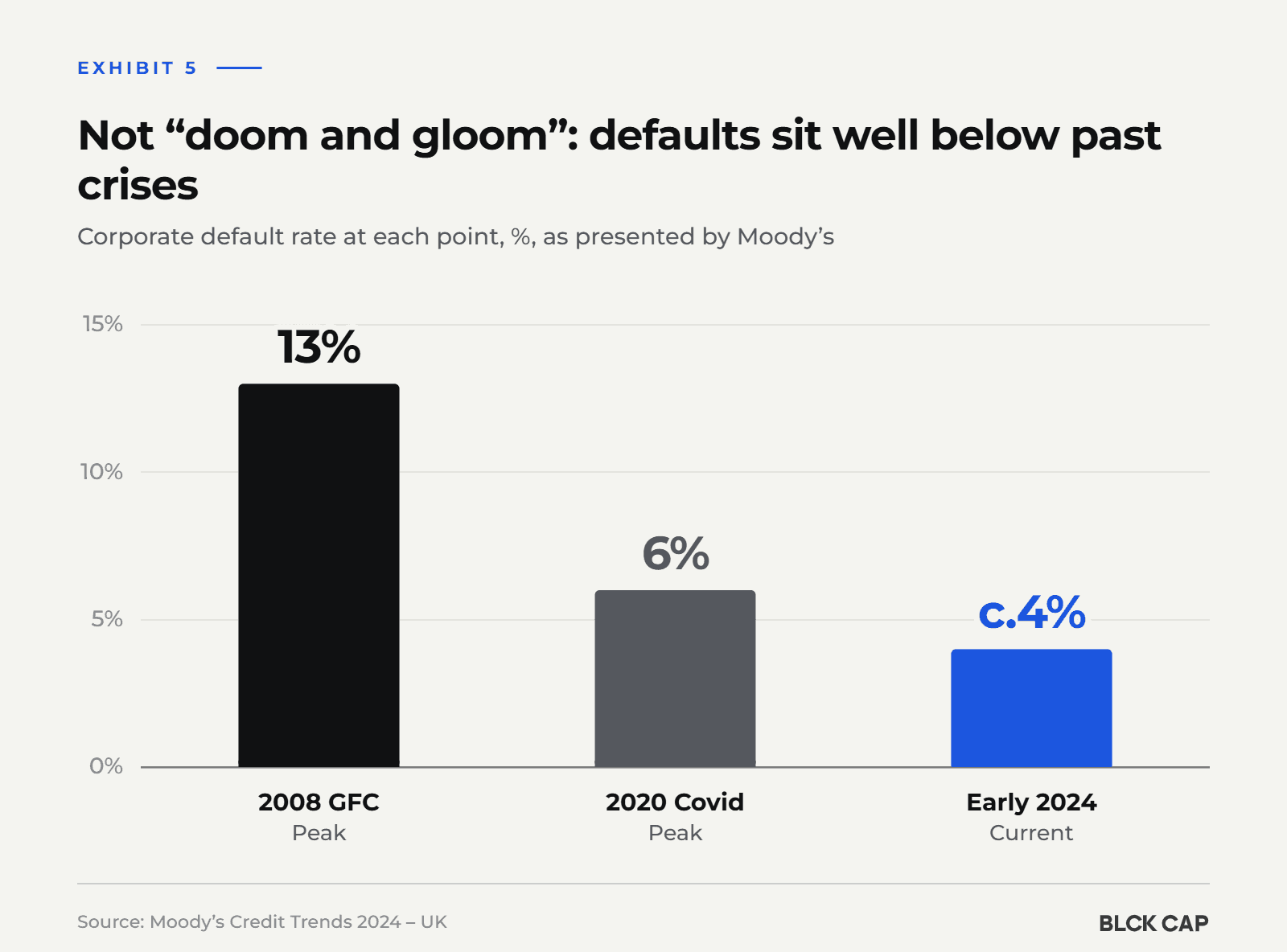
Crucially, this is not a doom-and-gloom scenario. Default rates hit 6% in 2020 and spiked to 13% during the financial crisis; today they sit at around 4%, and Moody’s expect them to flatline or ease slightly.
Digital finance and tokenisation: hype versus appetite
The World Economic Forum estimates that asset tokenisation will affect USD 13trn of assets. The final session heard from two banking heads at UBS and Deutsche Bank who focus solely on digital assets.
They set out three advantages of tokens over traditional securities:
Lower costs – a blockchain is immutable, which can save significant cost in audit and settlement verification.
Always open – tokens trade digitally 24/7/365, rather than within banking hours.
Instant settlement – versus T+2 today, although that is trending down.
The drawback is that a tokenised bond cannot deliver its full benefits without a digital currency economy to settle in. Experiments with central bank digital currencies (CBDCs) and tokenised deposits are under way, and banks see major settlement efficiencies from CBDCs in particular.
UBS issued a CHF 330m digital bond last year, but the panel’s view was that the market still lacks liquidity and is struggling to win serious institutional adoption – “the digital bond market is slowly evolving”.
Many questions from the audience asked whether tokenisation conflicts with ESG goals. The panellists argued that digital bonds can be more energy efficient than traditional bonds, thanks to less human input (a lower carbon footprint) and blockchains built on energy-efficient verification methods – proof of stake rather than proof of work.
The takeaway
The UK enters 2024 with a stagnant household economy, higher debt costs and an election on the horizon. But the system is resilient: banks are profitable, most mortgages have yet to reset, arrears remain far below crisis levels, and defaults are contained. Capital is still available – it is simply more selective. For borrowers and sponsors, that puts a premium on structuring well and knowing where the capital is.
This article reflects the author’s notes and personal views from Moody’s Credit Trends 2024 – UK conference, and was first published on 6 February 2024. Figures and expectations are as presented on the day and have not been updated. It is provided for information only and does not constitute investment, financial or tax advice, or an offer or solicitation to buy or sell any security or financial product.