
 Jonathan Black

Real estate credit is, in our view, the best risk-adjusted return available to investors today. Rates are at decade highs, banks have stepped back, and alternative lenders can earn mid-teen returns at bank-like risk – inside 60% loan-to-value.
The thesis in brief
The market. Covid increased the money supply while unemployment stayed low – producing a resilient economy, liquidity and inflation, and with them rental growth. Rates are now at decade highs, so values should have fallen; but plentiful liquidity and strong bank balance sheets mean sellers aren’t budging and insolvencies aren’t widespread. The result: transaction volumes are down 55% on 2021. With inflation losing steam in the UK and Europe, one of two things must give – either asset values fall as yields widen, or base rates come down.
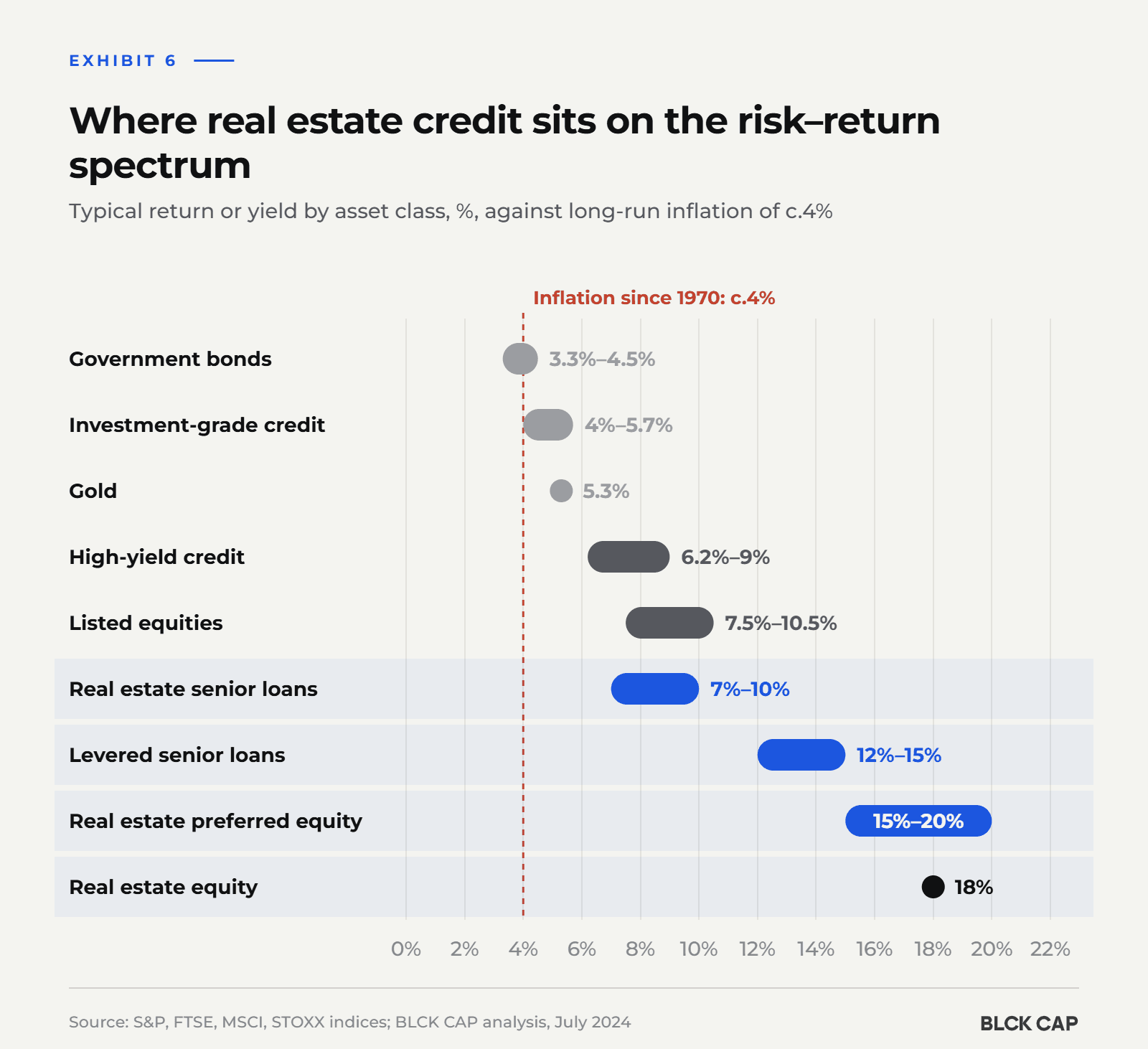
What is a “good” risk-adjusted return? Average inflation across the UK, US and EU since the 1970s is around 4%, and any investment should beat that after tax. “Safe” investments such as government bonds and investment-grade credit yield c.4–5.5% – a negative real return once tax is paid. Among the largest asset classes, that leaves high-yield credit (6–9%), equities (8–11%) and real estate (7–15%).
The opportunity. A lack of transactions and uncertainty over valuations are pushing banks out of the market. That allows alternative lenders to step in and secure mid-teen returns at bank-like risk, inside 60% loan-to-value – a funding opportunity of around €180bn across the UK and Europe.
Macro: the money has fed through
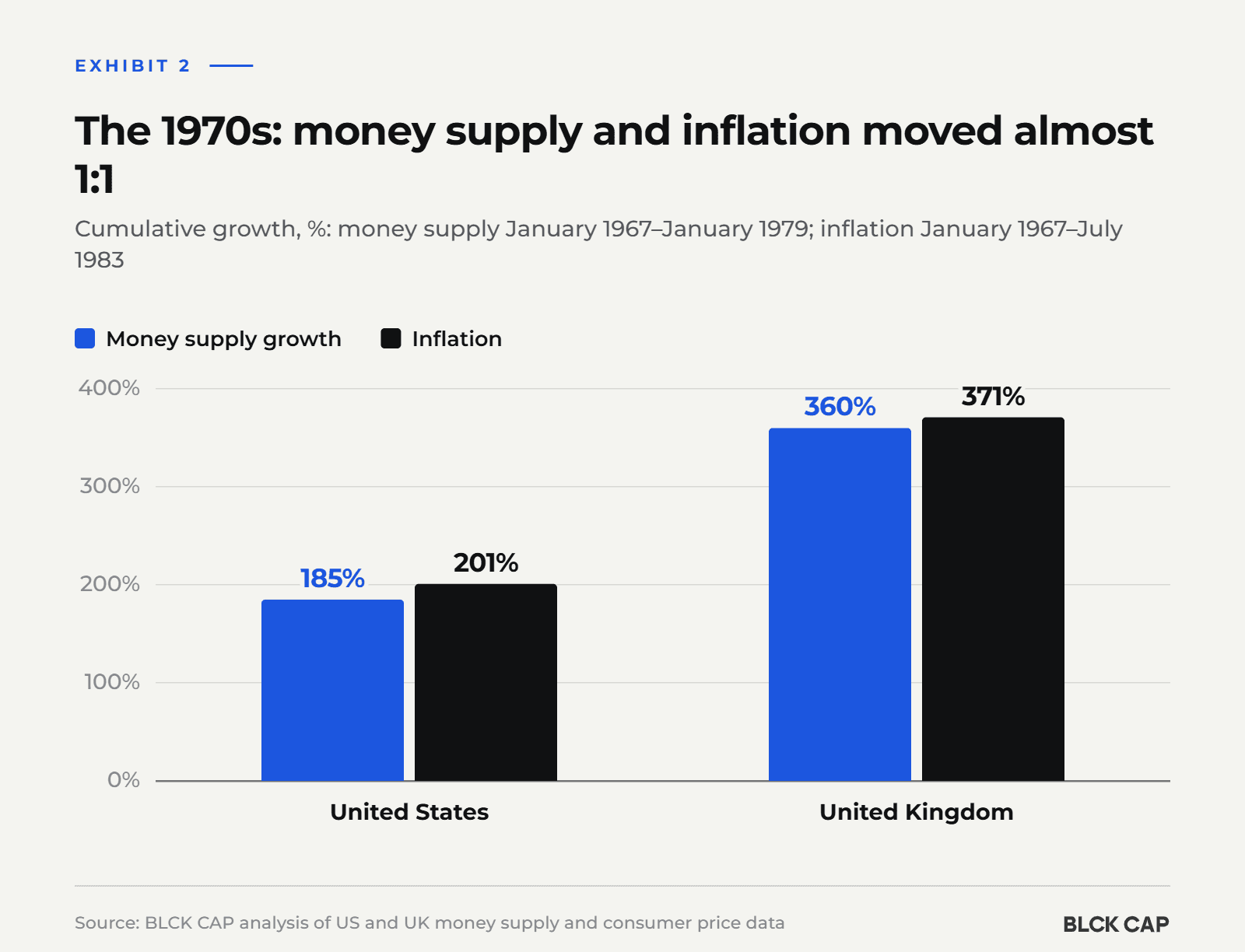
The 1970s demonstrated a near 1:1 relationship between money supply growth and inflation. The post-Covid period has followed the same pattern: between February 2020 and April 2024 the US, UK and eurozone increased their money supply by 35%, 21% and 22% respectively – and each has experienced around 20% inflation.
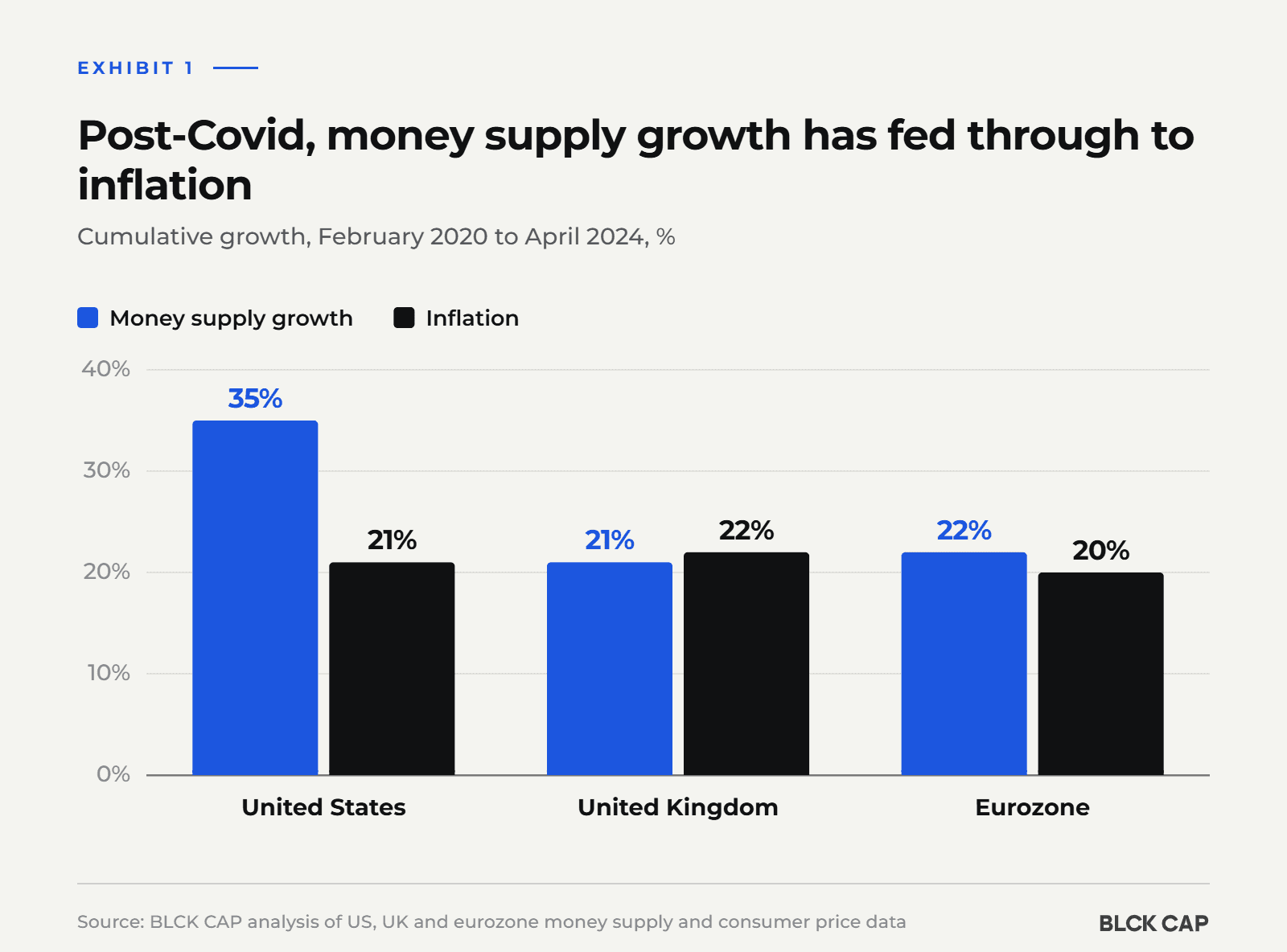
In the UK and Europe, inflation has now caught up with money supply growth: the Covid money injection is potentially “fully spent”. The US still has c.15% of inflation “to come” – which means higher-for-longer Federal Reserve rates and a stronger dollar, and with it the risk of imported inflation in the UK and Europe.
Employment kept the economy – and liquidity – resilient
GDP growth and unemployment move inversely, and unemployment has stayed close to record lows since 2020: 3.6% in the US, 4.0% in the UK and 6.0% in the EU. Strong employment keeps pension contributions high, and insurance premiums – which typically fall in recessions – have shown no notable drop outside the 2020–21 lockdowns. Strong employment across the major economies means capital and liquidity for investment.
Real estate: values haven’t reset
Yields and rents
Real estate values are tied to government bond yields. The last cycle was characterised by low rental growth and cheap debt: prime yields compressed to record lows, but kept a 2–3% premium over government yields.
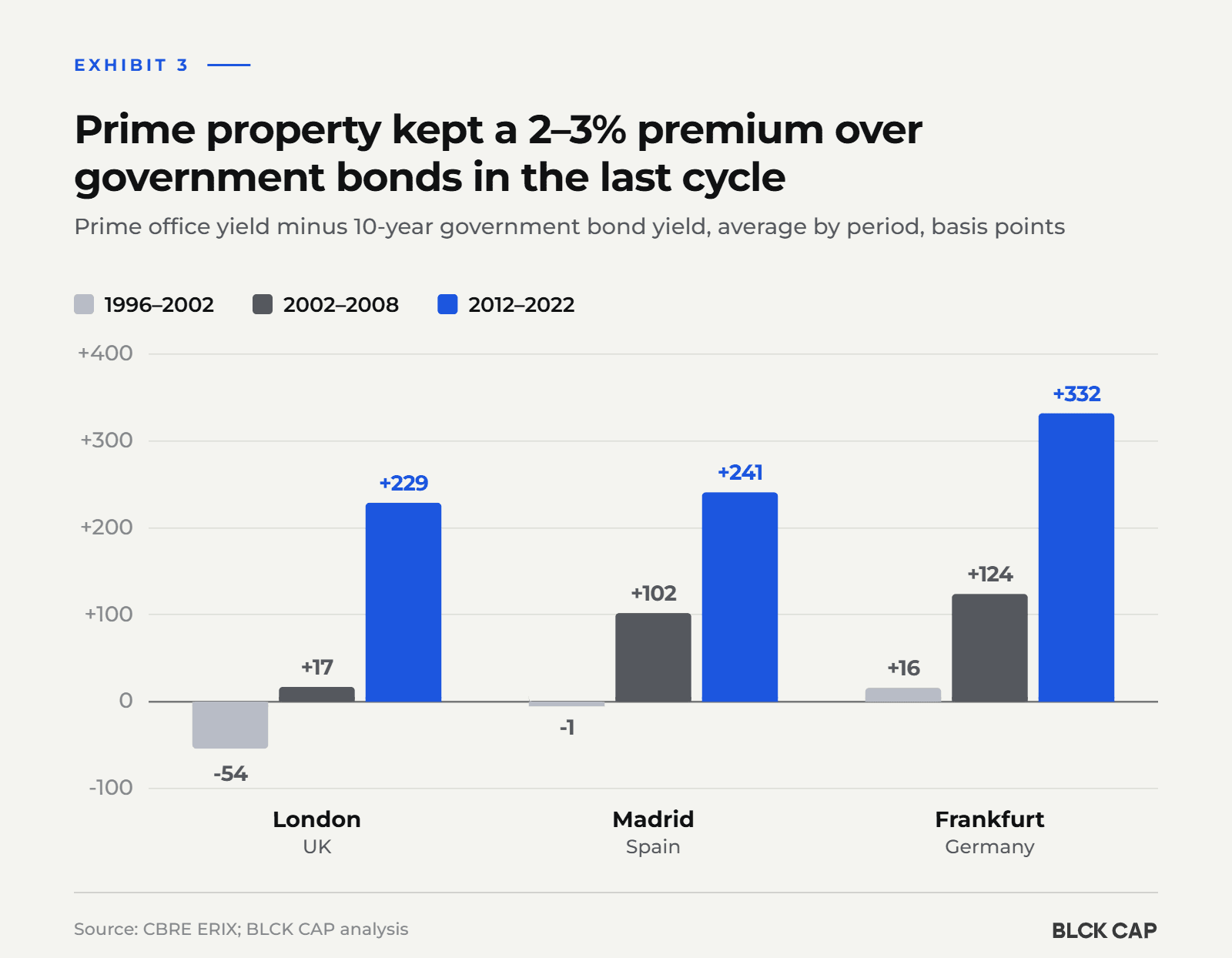
Government yields and base rates have since spiked – increasing as much as 20-fold. But rental growth and liquidity have supported values, so prime yields have barely moved.
The bid–ask gap
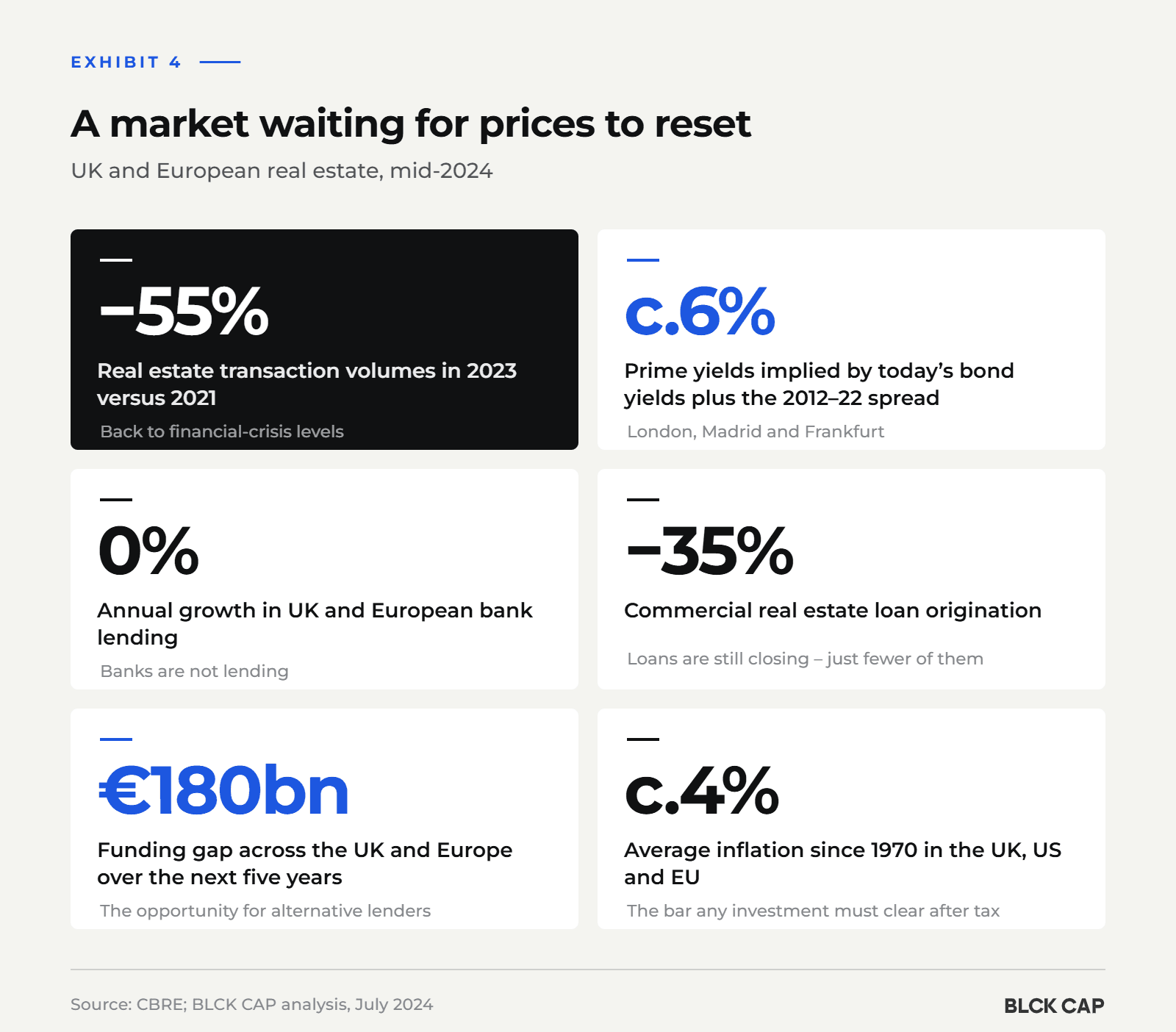
Applying the 2012–22 average spread to today’s 10-year government yields suggests prime yields should widen to c.6% in London, Madrid and Frankfurt. They haven’t – and investors expect them to be much higher. Buyers and sellers can’t agree on price, so deals aren’t happening: 2023 transaction volumes were back at financial-crisis levels, down 55% on 2021.
Banks are healthier than in 2008
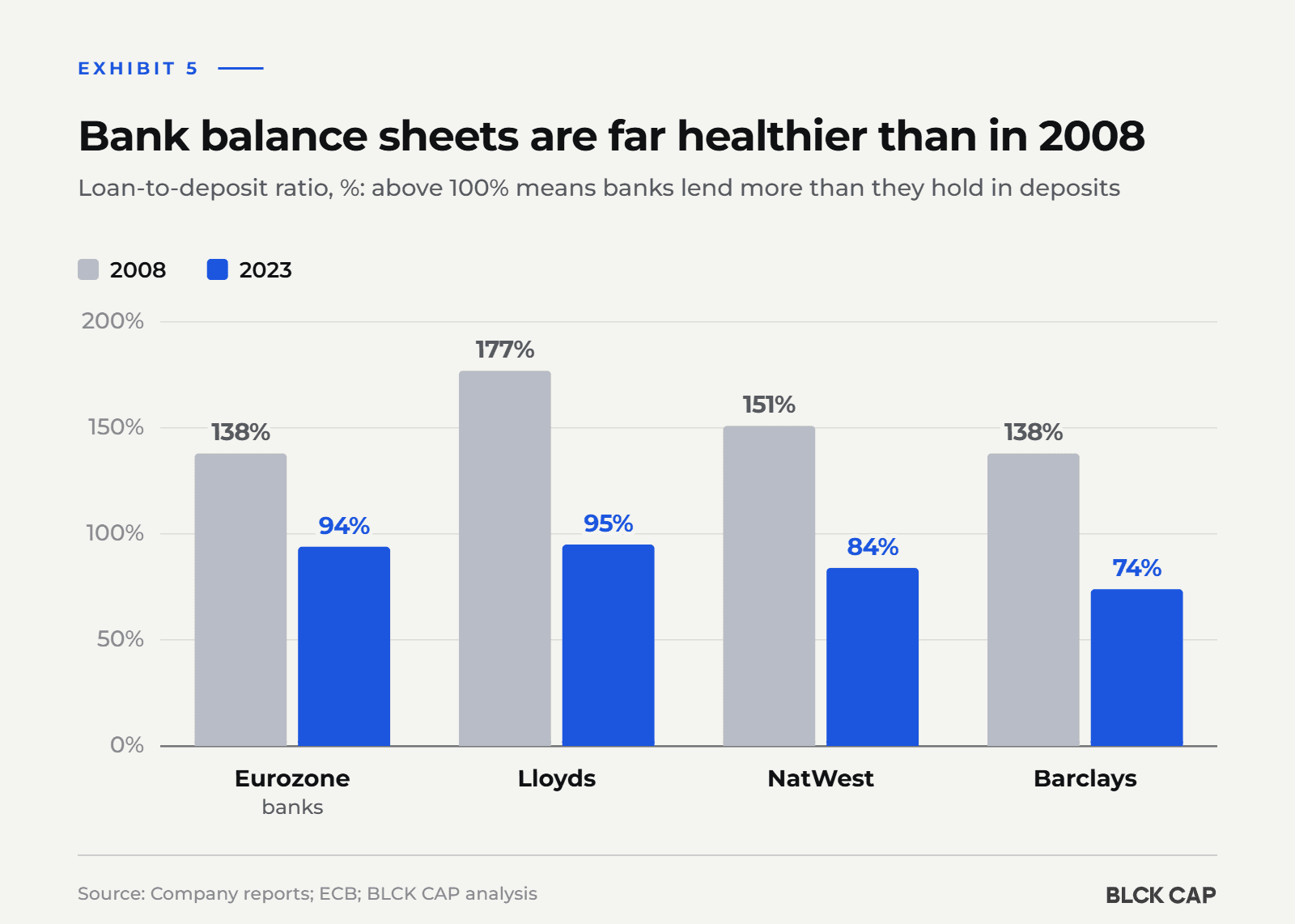
During the financial crisis, many banks lent far more than they held in deposits. Today, loan-to-deposit ratios are comfortably below 100% across the eurozone and the major UK banks. That allows banks to be less aggressive with defaulted positions – limiting widespread insolvency and distress.
The opportunity
Banks aren’t lending: annual lending growth across UK and European banks is around zero. Loans are still closing – commercial real estate loan origination is down 35%, against a 55% fall in transactions – but non-bank lenders are steadily taking market share, and the funding gap over the next five years is estimated at €180bn.
The opportunity is in its second innings: the last decade set the scene and validated the market. Now is the time to grow.
Set against the alternatives, real estate credit stands out. Senior real estate loans offer returns comparable to listed equities, and levered senior loans reach the mid-teens – with security over real assets and a cushion of equity beneath them.
How senior lending delivers mid-teen returns
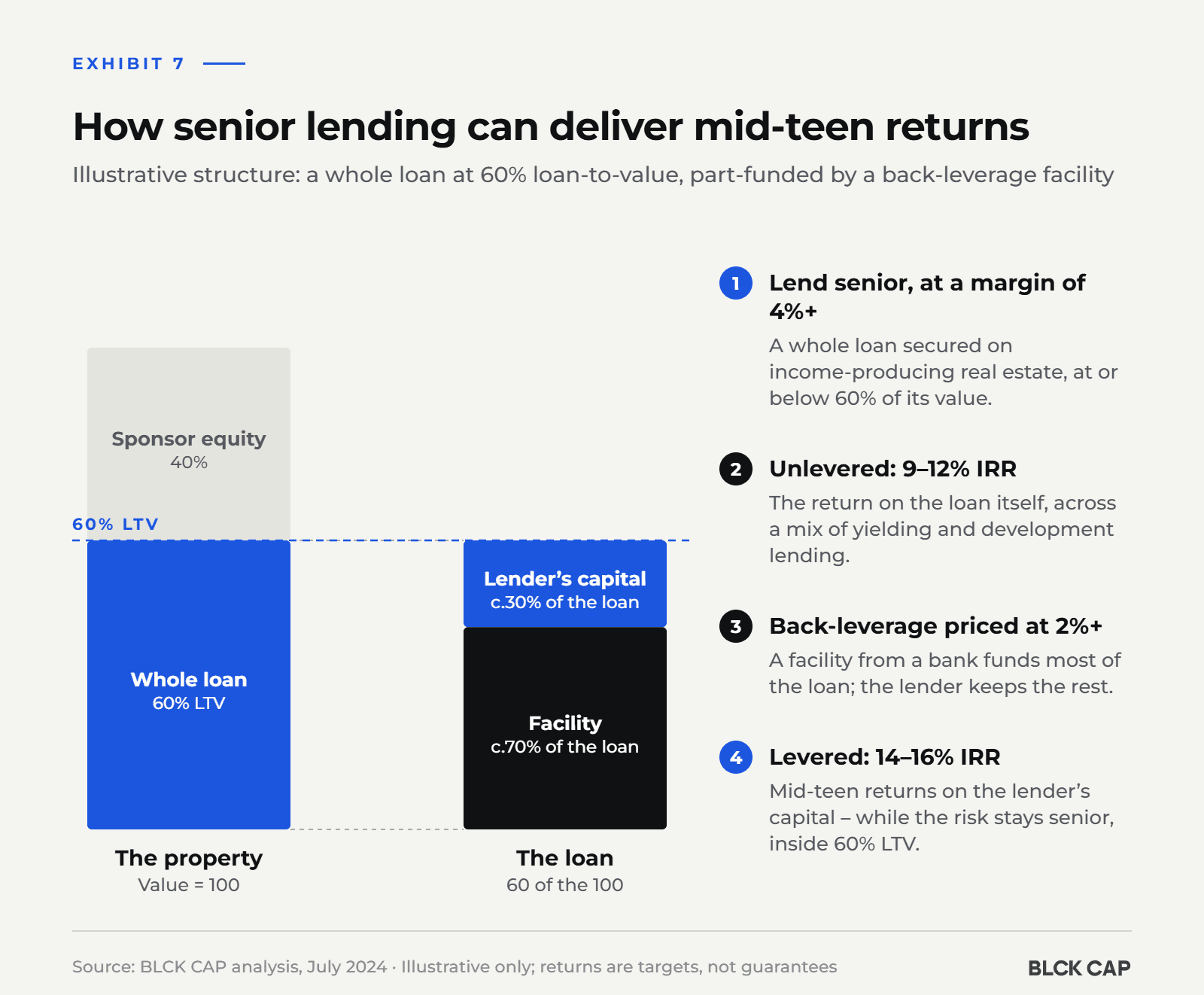
The mechanics are straightforward. Whole loans written at margins of 4%+ deliver unlevered returns of 9–12% IRR, across a mix of development and yielding assets. Financing part of each loan with a back-leverage facility priced at 2%+ lifts the return on the lender’s own capital to 14–16% IRR – mid-teen returns, while the risk stays senior.
Smaller deals, greater returns
Deal size matters. Large transactions offer a better return on effort, but attract more competition – and lower returns. Smaller deals take more work but face far less competition, so they price better. The most attractive opportunities sit in smaller transactions, where significantly fewer capital providers compete.
Conclusion
Real estate values have not yet adjusted to higher rates, banks are lending less, and a large funding gap is opening up. For lenders willing to do the work, that creates the best risk-adjusted return in the market today: mid-teen returns, secured on real assets, inside 60% loan-to-value. As a real estate investment bank, BLCK CAP sits between sponsors who need capital and the lenders who provide it – which is exactly where this opportunity is being written.
This article reflects the author’s views and was first published in July 2024. Figures are as at that date and have not been updated. Returns shown are illustrative or targets, not guarantees. Nothing here is investment, financial, tax or legal advice, or an offer or solicitation to buy or sell any security or financial product. Past performance is not a reliable indicator of future results.