
 Jonathan Black
We wrote this paper to explain why we think Bitcoin will become a global reserve currency and store of value. The thesis is simple: the global debt burden keeps growing, that growth expands the supply of fiat money, and a bigger money supply should push the price of Bitcoin higher.
The argument comes in four parts – the macroeconomic backdrop, the fundamentals of Bitcoin, its price behaviour, and the risks. On that basis, we set a conservative price target of $150,000 per Bitcoin by December 2026.
Part 1: The macro story
Money supply and inflation
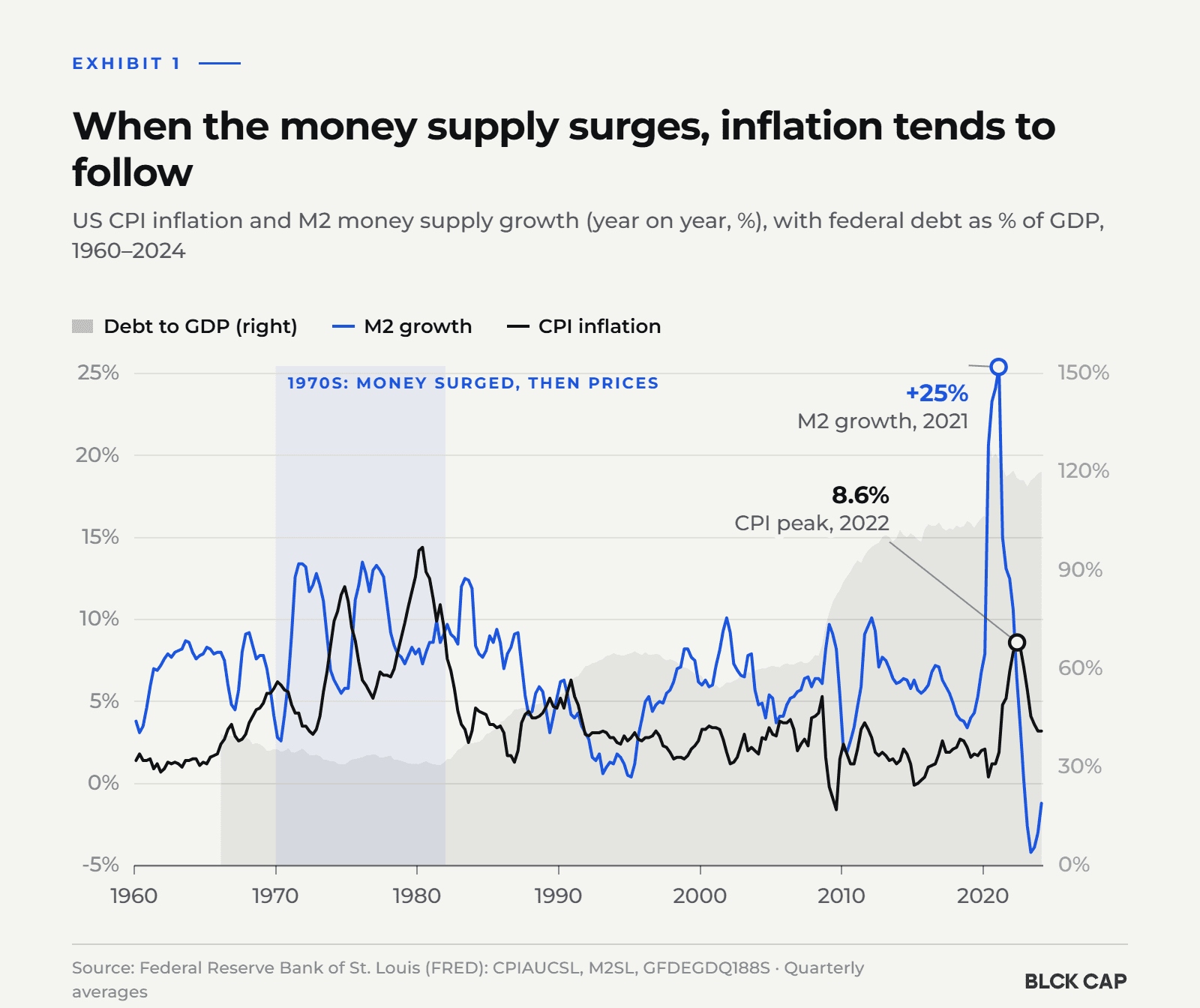
When the money supply increases, inflation follows. The 1970s showed it clearly: waves of money supply growth were followed by waves of inflation. In 2020–21, US money supply (M2) grew by as much as 25% in a year – far beyond anything seen in the 1970s.
So far, the inflationary impact of the Covid money-supply surge has been relatively muted. But despite the recent fall in inflation, we may only be at the beginning of a long inflationary period.
The debt trap
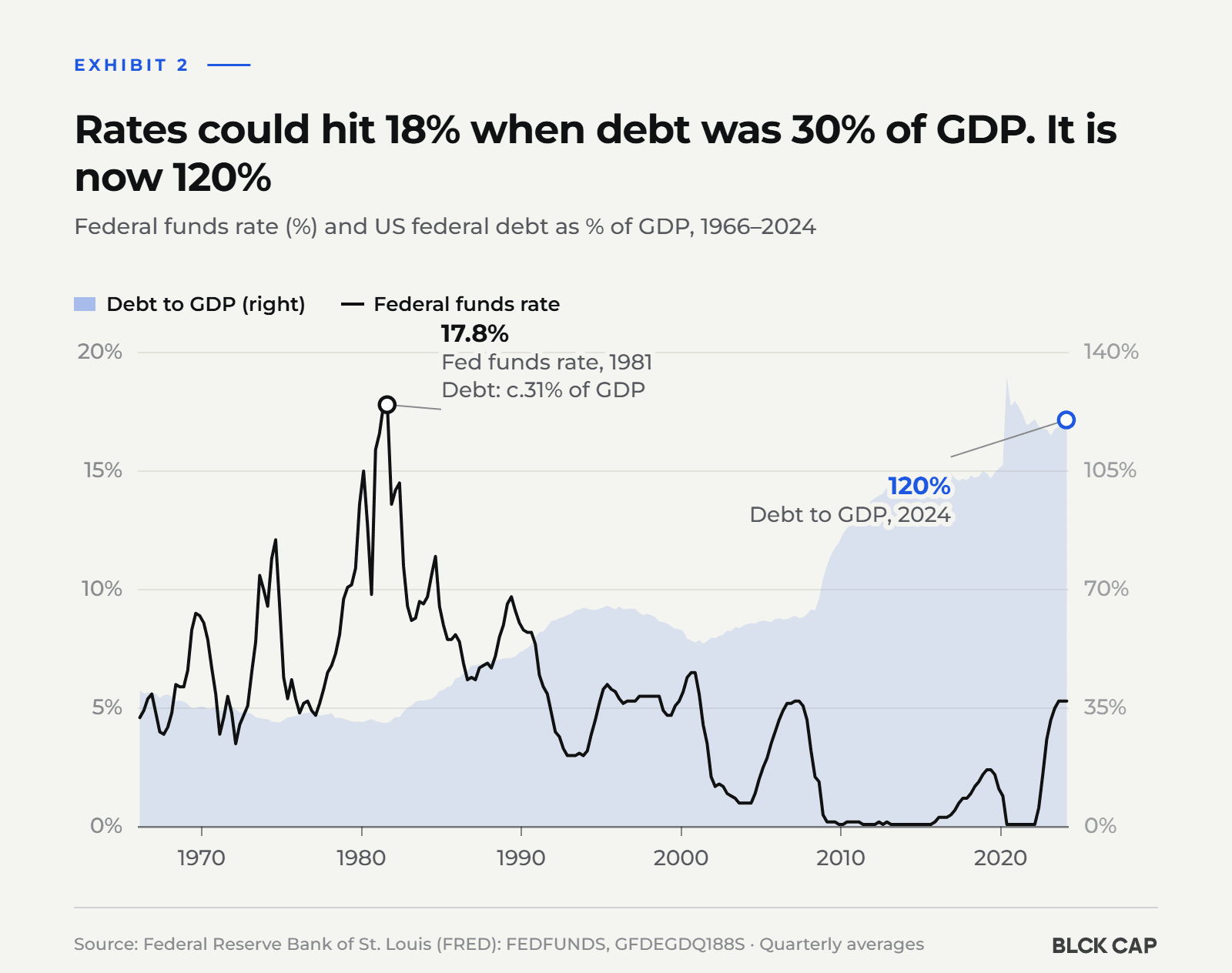
The textbook way to fight inflation is to raise interest rates. That was possible in the 1970s, when US debt was around 30% of GDP – the Federal Reserve could take rates to almost 18%.
Today, debt is around 120% of GDP, and raising rates sets off a loop: higher rates increase interest costs, which widen the fiscal deficit, which increases the debt, which raises interest costs again – and repeat.
The numbers are large. US federal interest expense was c.$900bn in FY2023, on a blended interest rate of just 2.7%. Around 30% of US government debt matures within the next 12 months; repricing the total debt at 5% would cost c.$1.3trn a year.
And the debt is still growing. Debt held by the public is c.95–100% of GDP today, and the Congressional Budget Office expects it to rise by another 20 percentage points, to 120%, by the end of 2033.
Debt and the money supply
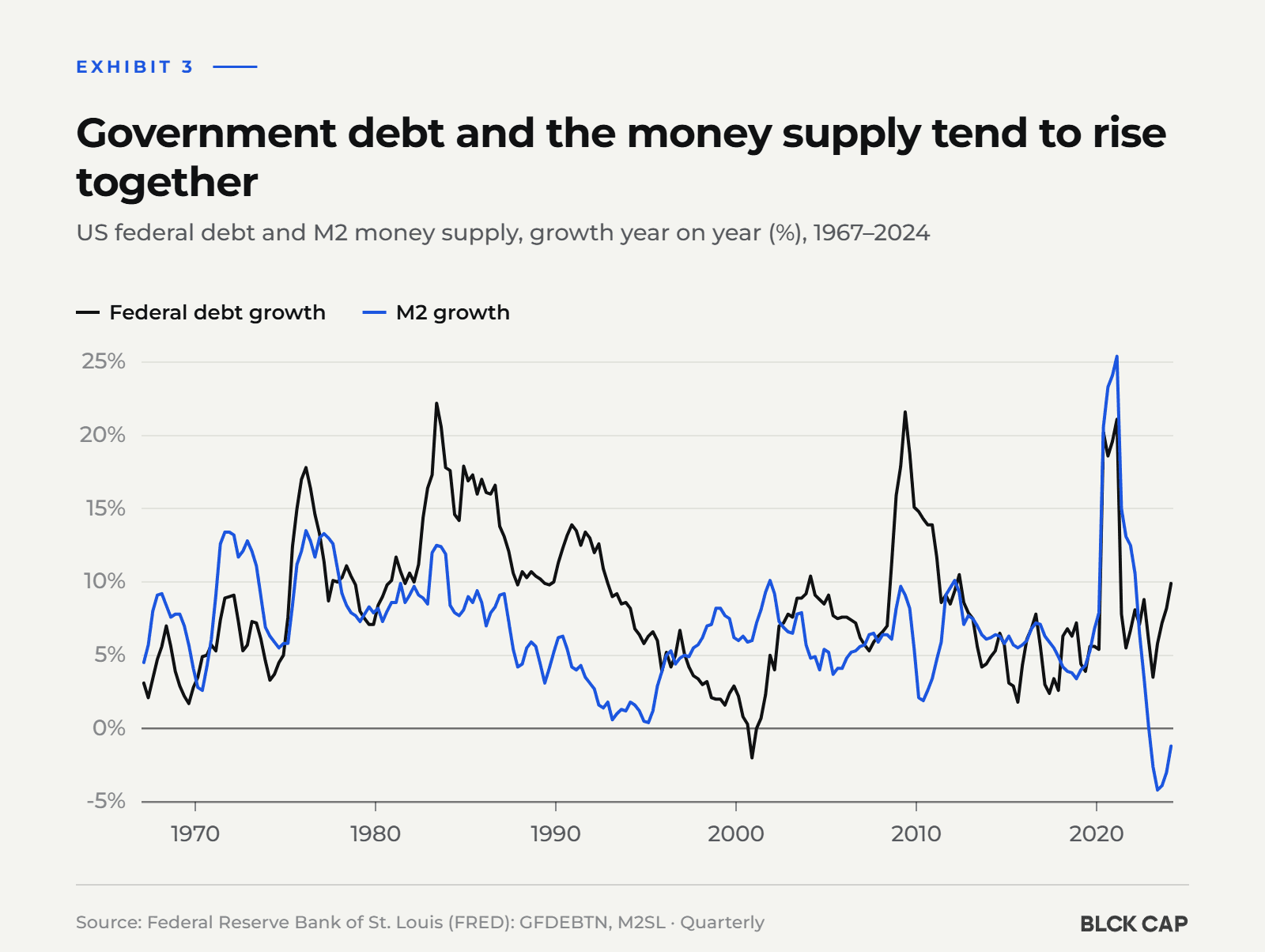
Government debt and the money supply tend to rise together: as US debt increases, the money supply increases too. It is a full circle – more money leads to inflation, inflation leads to higher rates, higher rates lead to more debt, and more debt leads to more money.
Bitcoin and the money supply
Bitcoin’s price has been volatile, as you would expect from a newly forming asset class. But its performance appears to be linked to changes in the global money supply across the major central banks – the US, the eurozone, China and Japan.
Putting it together:
We may only be at the beginning of a long-term inflationary cycle.
Government debt will continue to grow – even faster if inflation persists.
The money supply will grow with government debt.
This will devalue the US dollar – and Bitcoin will grow in price.
Part 2: The fundamentals of Bitcoin
What is Bitcoin?
In one phrase: digital gold. Cathie Wood, CEO of Ark Invest, describes Bitcoin in five terms:
1. First – the first digital asset that cannot be infinitely reproduced. 2. Global – like the internet, it has no physical location. 3. Digital – it runs 24/7/365, and everything is transparent online. 4. Private – it separates money and state; no government controls it. 5. Rule-based – it follows a fixed supply and a pre-determined rate of inflation.
It has other important properties. It is decentralised: no single entity controls transactions, so there is no single point of failure. It is peer-to-peer: users transact without an intermediary – unlike PayPal or mobile banking, it is like handing someone cash over the internet. And it is cheap: Bitcoin transaction fees have averaged US$2.56 over the past ten years, against 1–3% for traditional foreign-exchange transfers.
What are its rules?
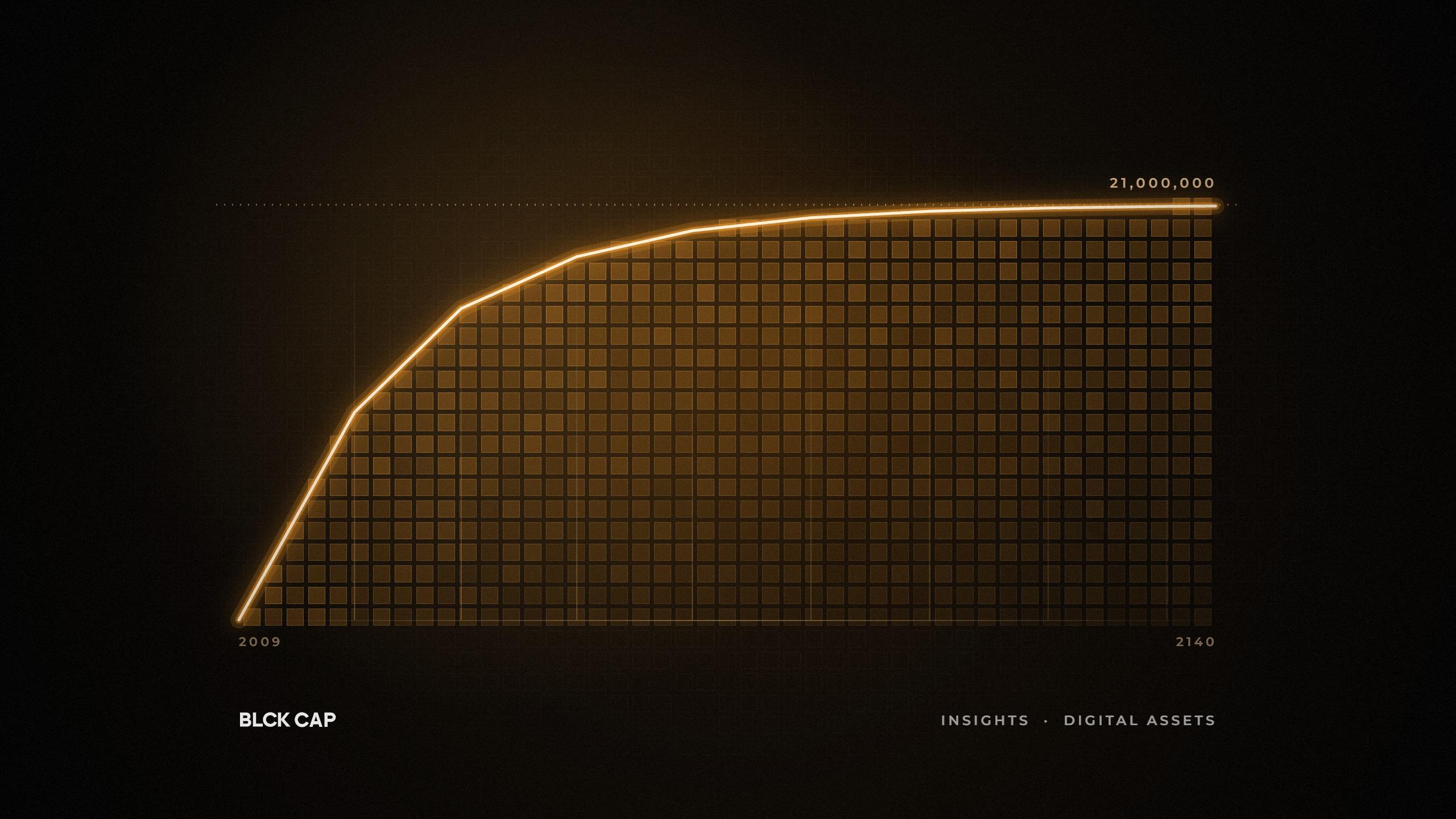
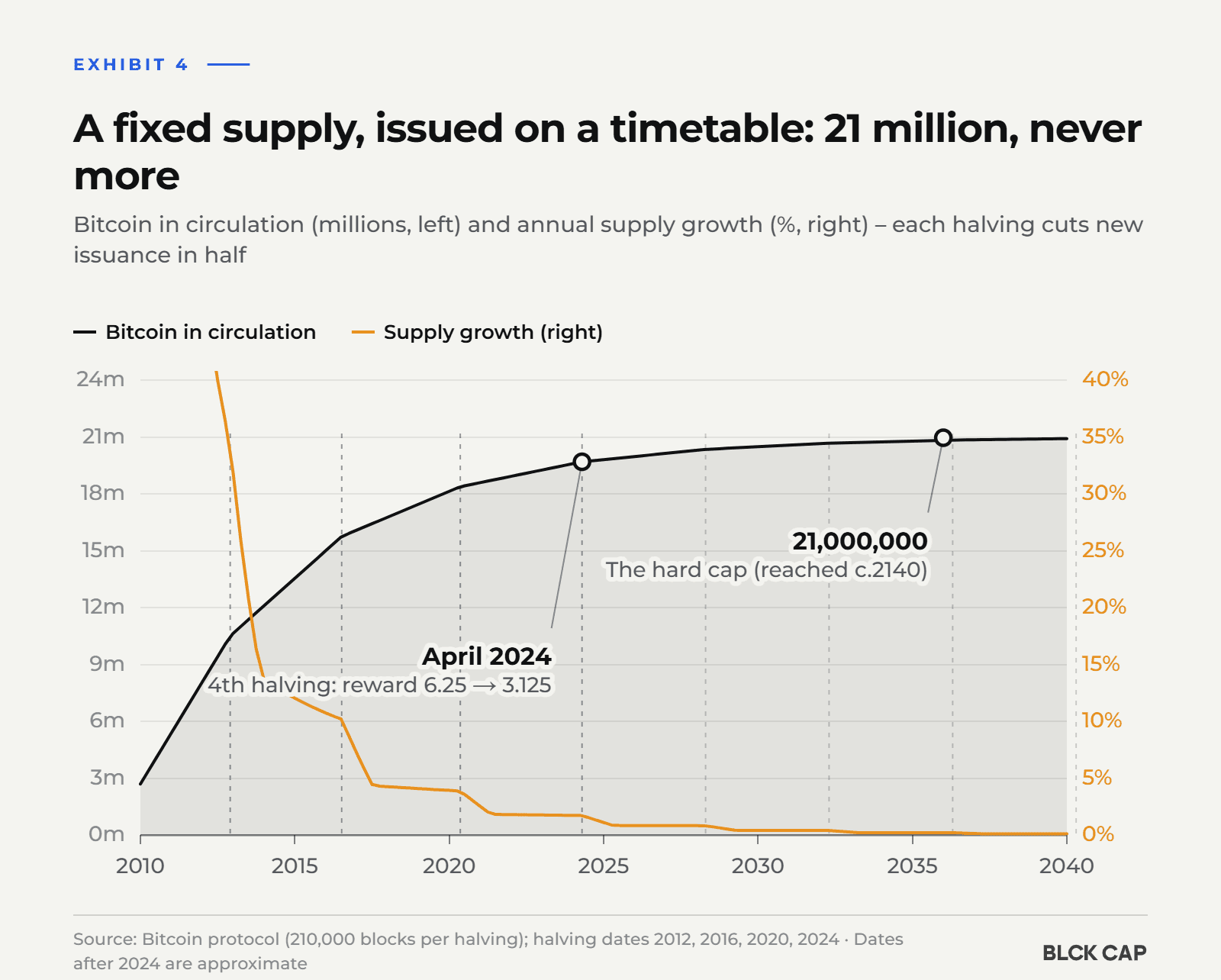
Finite – there will only ever be 21 million Bitcoins.
A fixed inflation rate – new Bitcoins are issued as a reward to the miners who verify transactions, and that reward halves every 210,000 blocks, roughly every four years: from 50 to 25 (2012), 12.5 (2016), 6.25 (2020) and 3.125 (April 2024).
Small blocks – 1MB block sizes keep the network light enough for anyone to run, which keeps it decentralised.
How does it work?
Bitcoin is a public ledger: a database of every transaction ever made, like a giant spreadsheet that anyone can inspect. Transactions are verified autonomously by a network of computers called miners, which compete to add each new block to the chain – and earn the block reward for doing so.
Part 3: Price
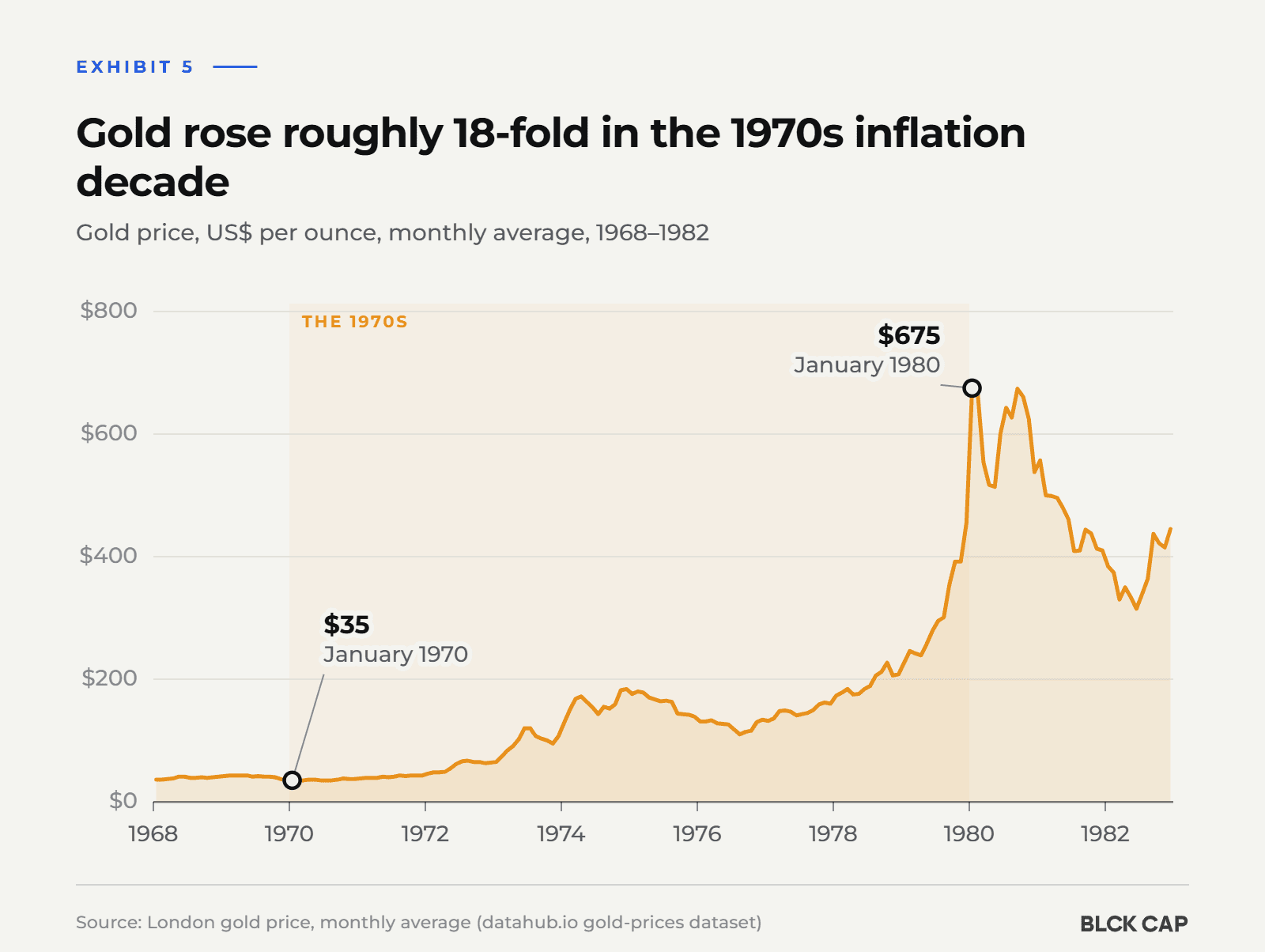
Gold rose 18-fold in the 1970s
The economy today looks a lot like the 1970s – and in the 1970s, gold was the top-performing asset, rising roughly 18-fold. Bitcoin should benefit from the same macro tailwinds.
The world’s largest asset manager agrees with the comparison. In July 2023, BlackRock CEO Larry Fink described Bitcoin as “digitising gold in many ways” – a hedge against inflation, against the problems of any one country, or a devaluation of currency – and as “an international asset”.
Room to grow
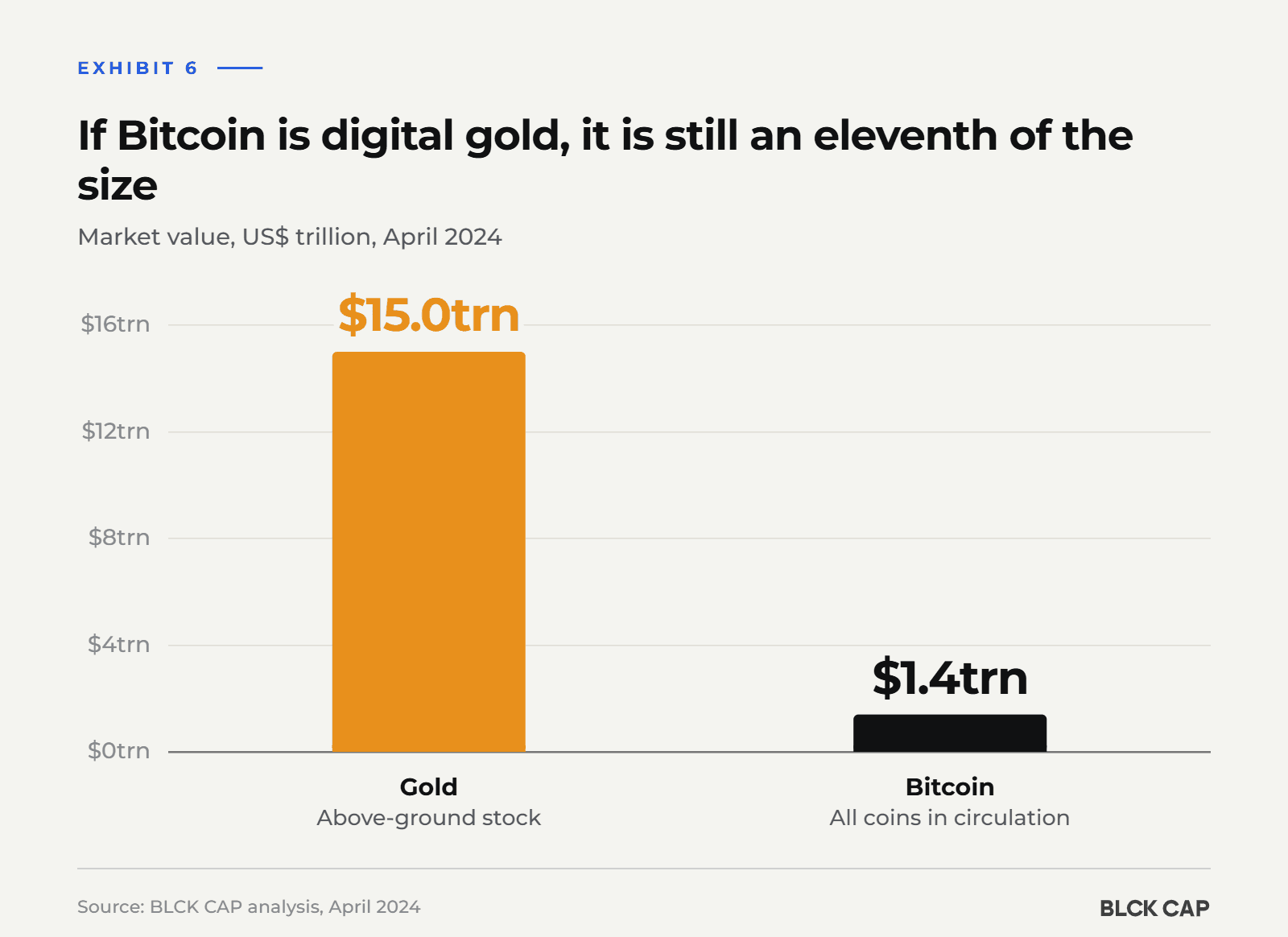
If Bitcoin is digital gold, it has a long way to go. Gold’s market value is around $15trn; Bitcoin’s is around $1.4trn. Simply matching gold would mean an 11-fold increase.
Four-year cycles
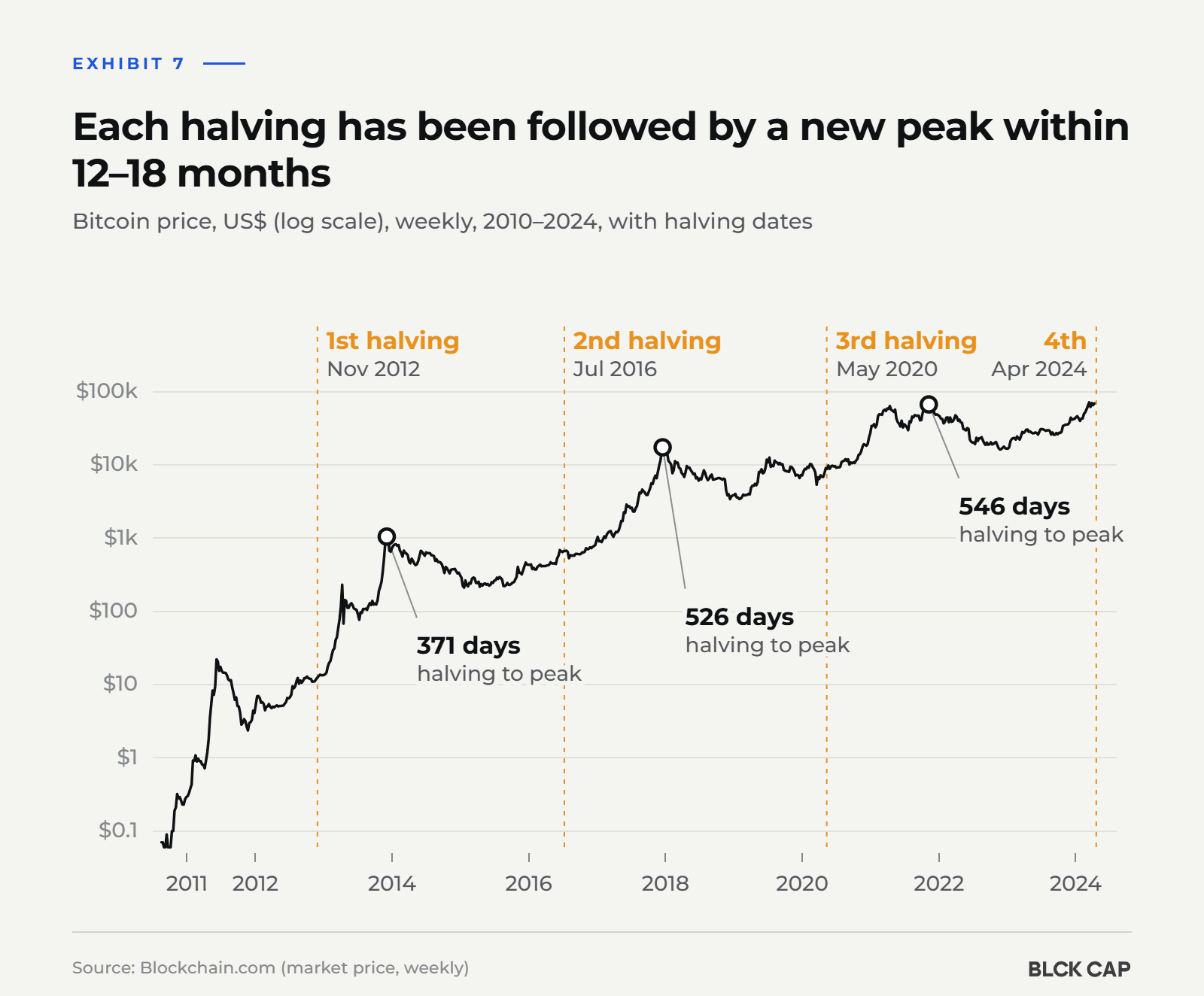
Bitcoin’s price moves in cycles driven by the halving. Each of the first three halvings was followed by a new all-time high: 371 days after the first (November 2012), 526 days after the second (July 2016) and 546 days after the third (May 2020). The pattern is cyclical – new highs, followed by a reversion to the long-term trend.
Why Bitcoin rather than another cryptocurrency?
Three reasons: liquidity, security and track record. Bitcoin is the largest, most traded and most secure network, with the longest history.
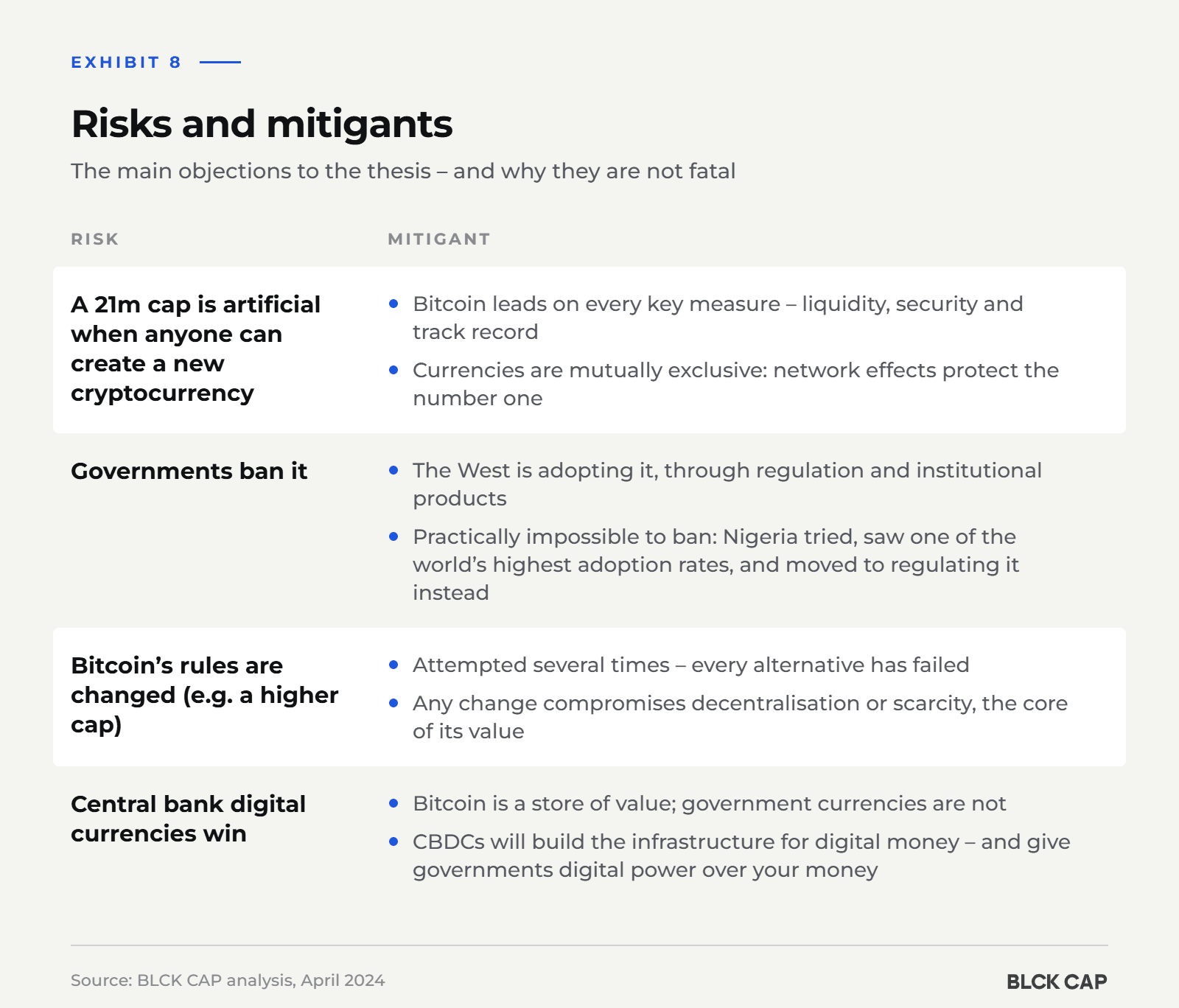
Part 4: Risks and mitigants
No thesis is without risk. These are the four main objections – and why we don’t think any of them is fatal.
Conclusion
Debt is growing, the money supply grows with it, and the tools used to fight inflation in the 1970s are far harder to use today. In that world, a scarce, global, rule-based asset should become more valuable over time. Bitcoin is the strongest candidate to be that asset – and why we think it will become a global reserve currency and store of value.
This article reflects the author’s personal views and was first published in April 2024. Figures, prices and forecasts are as at that date and have not been updated. Bitcoin and other digital assets are highly volatile and speculative, and you could lose all of the money you invest. Nothing here is investment, financial, tax or legal advice, a recommendation, or an offer or solicitation to buy or sell any asset. Past performance is not a reliable indicator of future results.